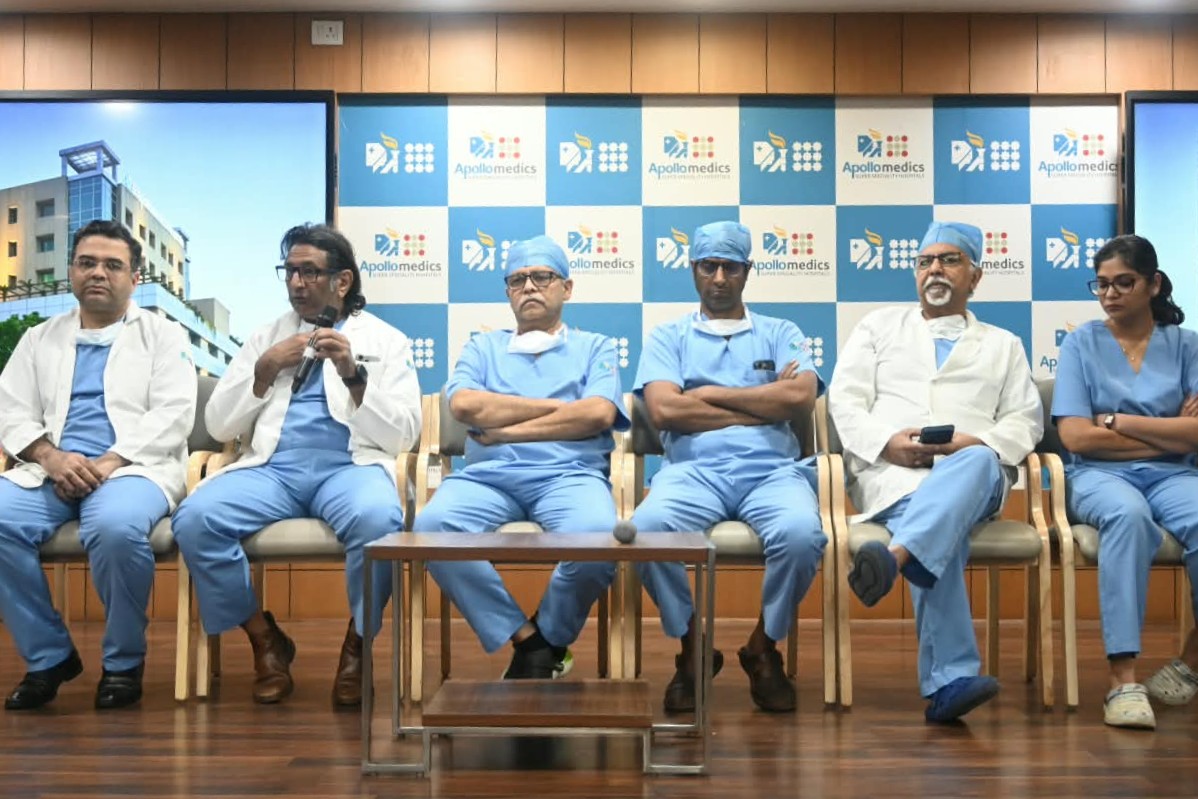
Yatharth Hospital, Greater Noida Launches Special Hernia Clinic
Greater Noida : People often tend to ignore stomach health. Until a problem becomes clearly visible, many do not consider it a serious illness. Due to negligence, people sometimes remain unaware of the condition until it worsens. In this context, awareness about hernia is extremely important, as most people ignore its early symptoms. Abdominal pain or a visible bulge is often dismissed as normal, but such small negligence can later turn into a major problem. With this objective, Yatharth Hospital, Greater Noida, has launched a special Hernia Clinic at its premises.
Dr. Mohib Hamidi, Senior Consultant & Head of Department (HOD), Robotic Surgeon – General & Laparoscopic Surgery, Yatharth Super Speciality Hospital, Greater Noida, said that on average 30 to 40 patients visit the hospital every month with hernia-related issues. Hernia is more commonly seen in people between the ages of 50 and 80, but it is no longer limited to the elderly. It is increasingly being diagnosed among young adults aged 20 to 40 as well.
According to the National Institute of Health (NIH), inguinal hernia is significantly more common in men. The lifetime risk of developing an inguinal hernia in men is approximately 27%–42%, compared to only 3%–6% in women. Around 90% of all inguinal hernia surgeries are performed on male patients.
In contrast, although femoral hernia is relatively rare, it is more commonly seen in women. Overall, in abdominal and other types of hernia cases, men account for a higher proportion, with studies suggesting that approximately 86% of cases occur in men.
Key Findings Related to Hernia:
-
Inguinal Hernia (Groin): Men are approximately 9–10 times more likely than women to undergo surgery for inguinal hernia.
-
Femoral Hernia: Although less common than inguinal hernia, it is more frequently seen in women, possibly due to their relatively wider pelvis.
-
Umbilical and Incisional Hernia: These are more common in women, particularly due to risks associated with pregnancy and previous abdominal surgeries.
-
Overall Trends: While men still account for the majority of inguinal, femoral, and abdominal hernia cases (around 86% in 2019), the rate of hernia among women is gradually increasing.
-
Age Factor: In men, inguinal hernia cases are more commonly seen in two age groups — during the first year of life and again after the age of 40.
Dr. Hamidi further explained that lifestyle factors play a significant role in the development of hernia. Persistent coughing, long-term constipation, and lifting heavy weights are major contributing factors. Individuals who engage in intense gym workouts or those who have previously undergone abdominal surgery are also at increased risk. While the condition is more common in men, women are not immune. Early symptoms include pain in a specific area of the abdomen, especially where a prior surgery was performed. A visible bulge while coughing or lifting weight is another key sign. Some patients also notice a bulge while walking or climbing stairs. Immediate medical consultation is advised if such symptoms appear.
Surgery is the only permanent treatment for hernia. A hernia occurs due to a weakness or hole in the abdominal wall. If left untreated, a part of the intestine can protrude through the opening and become trapped. In such cases, emergency surgery may be required, which can be risky. Therefore, delaying treatment is not advisable.
Earlier, hernia was treated through open surgery, which involved more pain, a longer hospital stay, and a larger scar. Today, laparoscopic surgery is widely used, resulting in less pain, shorter hospitalization, and minimal scarring. Patients can usually return home within one or two days and resume normal activities within three to four days.
Hernia can be prevented if people remain vigilant about their health. Those suffering from chronic cough or constipation should seek timely treatment. Avoid lifting heavy weights and maintain balance in daily activities. Small precautions can help prevent the need for surgery.